
The Atlas Mountains of Morocco run 2,500 km across the country like a spine, separating the Atlantic plains from the Sahara. They hide North Africa’s highest peak, thousand-year-old Berber villages, waterfall valleys an hour from Marrakech, and the most scenic mountain pass on the continent. This guide covers the three ranges, the best valleys to visit, trekking options and how to fit the Atlas into a Morocco itinerary.
The three Atlas ranges
High Atlas
The big one — home to Mount Toubkal (4,167 m), the highest peak in North Africa, and the dramatic Tizi n’Tichka pass (2,260 m) that every desert tour from Marrakech crosses. Trailheads like Imlil sit barely 90 minutes from the city.
Middle Atlas
Cedar forests, alpine-style Ifrane (‘Morocco’s Switzerland’) and troops of wild Barbary macaques near Azrou — you’ll cross it on any route between Fes and the Sahara.
Anti-Atlas
The arid southern range of pink granite and palm gorges around Tafraout — wilder, emptier, and a highlight of our 9-day Atlantic coast tour.
The valleys worth your time
Ourika Valley
The easiest Atlas escape from Marrakech: riverside tagine restaurants, the Setti Fatma waterfalls and Berber markets. Doable in a day — see our Ourika Valley day trip.
Imlil & the Toubkal area
The trekking capital. Village walks through walnut groves for casual hikers; the two-day summit push for the ambitious. Our 14-day Morocco trip includes a full Imlil day.
Dades & Todgha
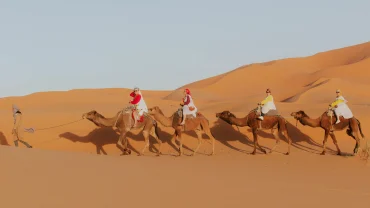
On the desert side: canyon walls 300 m high, the ‘Monkey Fingers’ rock formations and the Road of a Thousand Kasbahs — standard highlights of any multi-day Sahara itinerary.
Telouet & Ounila
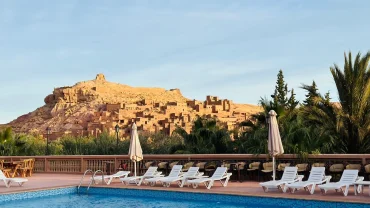
The old caravan route over the Atlas, past the crumbling Glaoui palace to UNESCO-listed Ait Ben Haddou — our Telouet & Ait Ben Haddou day trip covers it.
Trekking the Atlas Mountains
Options scale with your legs: half-day village walks (easy), the Toubkal summit in 2 days (challenging, June–October recommended), and multi-day treks between valleys staying in Berber guesthouses. Local mountain guides are mandatory for Toubkal and worth it everywhere — trails are unmarked and hospitality is the actual highlight. We arrange certified guides on all Atlas Mountains tours.
Berber culture
The Atlas is the heartland of the Amazigh (Berber) people — Morocco’s original inhabitants. Expect mint tea you can’t refuse, mud-brick villages stacked on slopes, saffron and walnut harvests, and weekly souks that have run for centuries. Visiting with a local guide turns scenery into stories.
When to go
- Spring (Mar–May): green valleys, snow still on peaks — the photogenic season.
- Summer (Jun–Aug): ideal for high-altitude trekking; valleys stay cooler than Marrakech.
- Autumn (Sep–Nov): stable weather, harvest season — best all-rounder.
- Winter (Dec–Feb): snow above 2,000 m; passes occasionally close, valleys remain visitable.
Fitting the Atlas into your Morocco trip
You’ll cross the Atlas on any desert route — but crossing isn’t experiencing. Add at least one valley day trip from Marrakech, or build hiking days into a longer tour. See all Atlas Mountains tours, or contact us to design a custom mountain itinerary — we reply within 24 hours.
Comment (0)